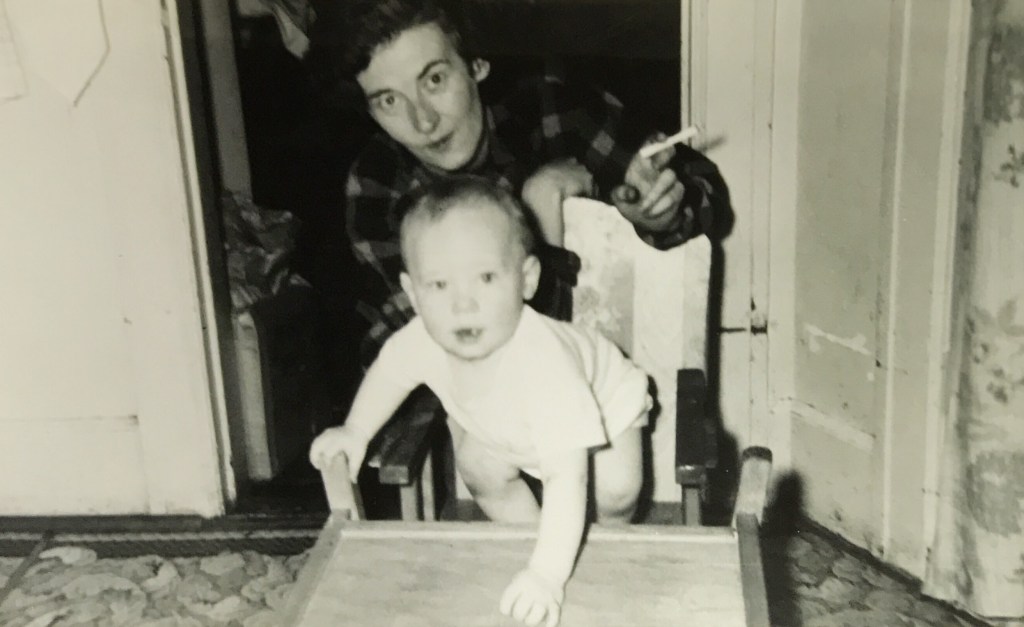
Depending on your age, you may have never looked at an old census. Maybe that should be rephrased to say you have never wanted to or needed to look at an old census. I didn’t. It was more a novelty than a necessity. However, If you are a regular on Ancestry.com, Family Search, or any other genealogical search engine, you are likely intimately aware and involved with the U.S. census over many decades, possibly centuries, and scour them regularly. At age sixty, my opinion changed. I decided I wanted to know who my father was. My mother never thought it important, or really any of my business, to share any of her life with me. The fact she never married and had no other children (that I have found anyway) didn’t change her position of living as an island. One of those factoids she kept to herself was the identity of my father. During her lifetime, we spent the bulk of my adult years apart. This was actually quite easy since she had essentially disowned me. Out of sight, out of mind. That philosophy worked well—until she died. I was informed of this via a phone call from a neighbor of hers. At first, I was a bit confused. I had never been “in-charge” of dealing with the affairs of a dead person. With Lisa’s help, I was able to navigate the responsibilities, and settle her estate as it was. Fortunately, my “inheritance” was the only thing I was interested in; her personal papers. I had several days to dig through her un-curated, and mostly unorganized, papers and photos before her service. There was no mandate or time limit that required I have answers to provide her church-going friends and neighbors, it was purely my morbid curiosity. For reference I was forty-years old when she died. What I found made my so angry, it took twenty-years before I was ready.
Using the genealogical search engines mentioned earlier, I was able to start building a rudimentary profile. I added Newspaper.com to my arsenal, which added stories to the data I was collecting. Another useful tidbit I was learning regarded the number of spelling variations in otherwise simple and popular names. It quickly reminded me of the similarity between that and having a correct email or web address. If it is not exact, it is invisible. Having the proper names is critical when searching any census, but understanding the possible variations can be equally helpful.

Another entity that was useful in my search was a group called RootsTech. It is an assembly of all things genealogy. From DNA kits, to research, from classes to cataloging and anything else imaginable. All of this created the largest genealogy conference in the world, and right on my doorstep. This was helpful as much for the environment if provided as the tools offered. Most classes, at some point, referenced data from a US census and how to use it for full effect in whatever your particular search. Point is, whatever your need, whatever your name or search parameters, with a click of the mouse, every released census had been sliced and diced to extract every bit of minueta available 24/7. I had become so used to that immediate navigability it hadn’t dawned on me that it was released 4 years before I was introduced to it, and in that time, morphed from simple pdf, to its own searchable wikipedia. Amongst all the classes at the recent RootsTech, several were devoted to the upcoming release of the 1950 census on April 1st. The release of every census is delayed 72 years, so it will be 2034 before I even show up on one. Most of my biggest questions have been answered, so I wasn’t on pins and needles waiting for this release, however, I started mulling over other possible secrets I might uncover and thought I better take a look.
Opening my Ancestry account, the home page was sprinkled with references to this new release. I did a quick cursory search and pulled up a name. I assumed a link would pop-up inquiring if I wanted to search the 1950 census. It didn’t open, nor did anything else specific to a drilled down search into 1950. As I searched, a small menu would pop-up asking a couple of question and ending asking if I wanted to be informed when that data became available. I admit being a bit pissed off. I pay you $20 a month and you don’t have this integrated into your program yet! What the hell! When my question floated back, drifting over my head slowly to allow time to visualize it, I grasped the fact everybody had to first make it a searchable document. It wasn’t born scanned and OCR ready. When I stumbled on to the 1940 census, it had been in developers hands for at least four years before I touched it, so I need to be patient—even if I don’t want to be.
 a life always under construction
Leave a comment